Ohio University, Dr. Thompson’s Plant and People (PBIO 1030-101), Fall 2018

Variety of aspects about Cerrado tied in with plants
Ohio University, Dr. Thompson’s Plant and People (PBIO 1030-101), Fall 2018

By Dakota Watters
The Cerrado is a biosphere reserve located in Brazil and it is one of the world’s oldest ecosystems. The Cerrado is a tropical biome with a savannah-like ecosystem that features grasslands, humidty, and dry forests. Fifty percent of the biosphere is directly under human control, and is becoming neglected because of it is not well known by most of the public, therefore their tourism rates are low. The Cerrado is the second largest biome in South America and covers approximately twenty-one percent of Brazilian territory. The Cerrado has a high number of organisms which aren’t found anywhere else in the world.
About twenty thousand years ago ancient mammals inhabited the the Cerrado region, these animals are known as megafauna which there is speculation they lived alongside with primitive humans. Now, the Cerrado is still home to many large mammals and also birds. There are nearly twenty different types of bird species that are endangered and are native to the Cerrado.
Humans have lived in the Cerrado biosphere for thousands of years. There are two hundred sixteen indigenous territories, along with 83 ethnic communities. Many people of these territories are fighting to keep their land, for there is no real ownership of it, so it threatens the life styles of these people. The indigenous people who live in the Cerrado make a living by manufacturing things from the land.
Their ancestors lived there just in the same tradition and way of life as today, yet now it’s in danger of being taken from them, without the land there would be nowhere for the people to go or work at, so they rely on the help of the government, which has so far been ineffective. The native people of this region inhabited the Cerrado survived by hunting, gathering, and by certain types of agriculture, such as the slash and burn method. The ancient civilizations relied heavily on the production of the land to feed their families and their community.
There are some ancient species of plants in the Cerrado biosphere that are in fear of becoming extinct, like campo limpo (open grassland),campo sujo (open shrub savannah),andCerrado sensu stricto (shrub dominated savannah). Researchers are trying to find ways to replant these species in different parts of the biosphere to help them flourish properly.
Until the Cerrado is taken into consideration by the Brazilian government and is protected, we should expect the Cerrado to be deforested and burned by invading populations of people who have no regard to the ecosystem and what it offers to not only the indigenous people there, but also to people around the world, as such a biosphere can be expected to have a negative effect over the rest of the world’s climate. Along with the remembrance of the Cerrado people and the history it brings into our culture.
References:
Centre, UNESCO World Heritage. “Cerrado Protected Areas: Chapada Dos Veadeiros and Emas National Parks.” UNESCO World Heritage Centre. Retrieved: http://whc.unesco.org/En/List/1035 Accessed on: 10-7-18.Pozzana. “Dia Do Cerrado – (11/9) Dia Nacional Do Cerrado: Onze De Setembro.” Biólogo, 11 Sept. 2018, biologo.com.br/bio/dia-do-cerrado Accessed on: 10-30-18
By: Jacob Jones
Received: https://phys.org/news/2017-12-brazil-cerrado-forests-wont-corporate.html
In Cerrado, Brazil the vegetation takes up two million kilometers of the land; the vegetation is over 22% of the land. It is also one of the reasons why that land is called Cerrado. The vegetation also spreads out to places like Roraima and Rupununi savannahs. The soil in these areas are mostly dystrophic. It is drained often which makes the vegetation immune to waterlogging. The Cerrado is very diverse in its vegetation as it can be filled with grassland in one place, and then in another filled with shrubs and small trees. Many of tried to figure out why this is the case. The biggest conclusion that they came up with is that fire had some play in why the vegetation is the way it is.
There are big and little trees, grasses and hedges, it is also extremely colorful in the Cerrado. The leaves are colorful on the trees and other vegetation surrounding it. Then it has areas that have richer soil that is more deciduous. These range from all sorts of sizes. Also, in the Cerrado they have places called wet campo. Wet campo is located between the Cerrado and another biosphere next to it which is called the gallery forest. This is one of the places where the water tables are high; when it rains here the place gets waterlogged quite badly. Then again it is the exact opposite when it doesn’t rain so tress have a very hard time growing unlike areas such as Mauritia flexuosa. Which is one of the prettiest places in Brazil. The image apart of this article is when it hasn’t rained in the wet campo.
This biome has been around for a very long time. Which means it has evolved with time, and so has the biomes plants and bugs. Also due to this biome being around for so long researchers are not entirely sure how many organisms are in the biome. The recent study says close to a thousand or maybe even over a thousand. There are several ways they are trying to figure out how many plants. One way is they are looking at the way they’re breeding. They are breeding in a way that they want far coverage. An interesting fact that could be added in is the fact this one of the biomes in this area to have large animals to cover the area.
In conclusion, the vegetation of the Cerrado is vast and diverse. Something researchers have been studying for hundreds of years. The biome is very old and very vast in both size and organisms. A big part is the soil and where that soil is located. If it’s located in wet campo, then trees can’t grow there. On the contrary Roraima there are many trees. This a beautiful biome with all type of vegetation.
Reference:
The Brazilian Cerrado Vegetation and Threats to its Biodiversity. 5-22 1997 (last updated). Retrieved: https://pdfs.semanticscholar.org/09bf/537ab8e403b110efa77247e81793c97515cf.pdf
Accessed on 10-11-18
By: Charlene Pepiot

Retrieved: https://jangoux.photoshelter.com/image/I0000hL9ygWPrZcM
One of Brazil’s largest biosphere reserves is the Cerrado. As the name suggests, the Cerrado ecosystem is the most prominent ecosystem within the boundaries of the reserve. Because of this the reserve contains the many lush grasslands and woodlands found within the Cerrado along with trees, low shrubby and dense brush. The trees of the Cerrado, however, are especially interesting and break many of the norms found in the common trees of North America (U.N.E.S.C.O. 2011).
In North America most trees consist of a trunk that has branches jutting out from the top followed by tinier shoots off of those. These branches are typically straight for the most part with only a few bends in them. The trees of the Cerrado however, break from this pattern. Rather than have a single straight trunk the trees are often split into two similar sized branches which then have branches jutting from the top that are crooked and misshapen, looking more like something of horror than an actual tree. A common misconception for this crookedness is that the branches were destroyed by fire and grew back jagged. While fires are common in the Cerrado, this is not the case, as even Cerrado trees subjected to no fire still grew the same way. In actuality, no one knows just why the Cerrado trees grow so crooked, but many believe it has to do with the quality of the soil. When certain Cerrado trees were planted in an urban area with better soil they were far less crooked than their wild counterparts. Considering that soil quality also plays a role in how high the trees grow, with types like the Strtqphnodendron barbadetimam growing up to around two and a half meters in good soil while staying the size of a bush in poorer ground, it can be assumed the soil definitely plays a role in Cerrado tree formation (Eiten 1972).
Branches are not the only difference between the trees of the Cerrado and those of North America. With a low percentage of rainfall, the trees of the Cerrado have adapted to preserve water and survive during the dry periods. They have fewer leaves than common trees in North
America and grow them during the Cerrado’s wet seasons. When the dry season hits many if not all of the leaves die and fall off, similar to how during winter many North American trees shed their leaves to help preserve water within the tree (Eiten 1972).
The unique structure and appearance of trees from the Cerrado are not the only thing they are good for. Many of those living within the biosphere reserve make good use of the trees to harvest their fruit. One organization called the “Cerrado Fruits Project” has people collect the fruit from the trees in the area and then sell the produce to help provide income for the 200,000 people that live in the Cerrado. From the nuts of the cashew to the fruit of the hog plum, Cerrado trees have variety in produce as well as uniqueness in looks that help to make them a crucial part of the Cerrado biosphere reserve (U.N.E.S.C.O. 2011)
References
Eiten, G. 1972. The Cerrado Vegetation of Brazil. Botanical Review (1972) 38:201-341.
https://jangoux.photoshelter.com/image/I0000hL9ygWPrZcM
United Nations Educational, Scientific and Cultural Organizations. 08-03-2011 (last updated). Biosphere Reserve Information. Available: http://www.unesco.org/mabdb/br/brdir/directory/biores.asp?code=BRA+02&mode=all. Accessed on 10-3-18.
By: Kaylee Smith

Photographer: Scott Warren. Retrieved: https://blog.nature.org/science/2016/07/01/scaling-up-agricultural-planning-for-conservation-in-the-brazilian-cerrado/
The Cerrado Biosphere Reserve has a plethora of diverse vegetation, which is at risk due to ecological threats. Many times, people focus on the more well known biosphere reserves which are threatened, such as the Amazon. In actuality, the Cerrado overall is rapidly depleting, much faster than the Amazon due to lack of environmental protection (Hance 2010). Despite this, many people lack knowledge of other at-risk biospheres, and factors which put them under threat, such as Cerrado.
There aren’t an ample amount of reasons why Cerrado is under threat, but the reasons are still putting this biosphere in grave danger. Thus, threatening the plants that inhibit this biosphere. Sadly, many of these threats are due to human activity. One being pollution, due to the use of pesticides, some of which are completely illegal in places except Brazil (Critical Ecosystem Partnership Fund (CEPF)). This causes for the depletion of vegetation, causing for plant endangerment. Furthermore, the multiple natural fires in the history of Cerrado has allowed for the evolution of plants (features that would make it more difficult for the vegetation to burn). Although, human carelessness in recent years has caused for destruction due to even a higher increase in forest fires (Critical Ecosystem Partnership Fund (CEPF)). One threat to this biosphere which isn’t due to humans would be invasive species, consisting of both plants and animals (Critical Ecosystem Partnership Fund (CEPF)). There is no doubt the Cerrado Biosphere Reserve has threats which is visible through the decreasing habitats and vegetation.
Overall, the vegetation of Cerrado is at risk due to a few factors. Personally, I believe the worst part is not that there are detrimental factors to this biosphere, or even that most of them are due to humans, but that biospheres such as Cerrado aren’t as talked about as much as some other biospheres which are more popular; especially when they’re under the same or worse ecological threat.
References
Critical Ecosystem Partnership Fund (CEPF).
Cerrado- Threats. Available:
https://www.cepf.net/our-work/biodiversity-hotspots/cerrado/threats
Accessed on 10-8-18.
Hance, J. 2010.
Brazil’s Cerrado. Available:
https://data.mongabay.com/profiles/cerrado.html
Accessed on 10-8-18.
By: Kayla Czyzewski
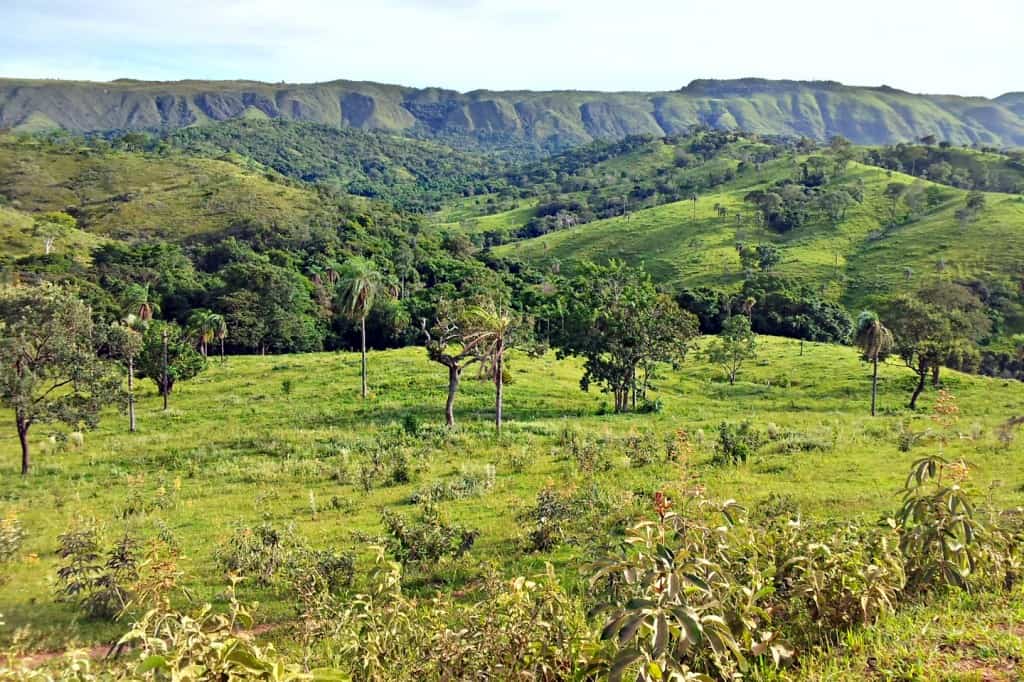
Cerrado is part of Brazil’s biome and includes the dense savanna woodlands. Cerrado is mostly made up of grasslands with short trees and bushes. It also covers different areas such as in the States of Tocantins and other areas as well. It covers one-fourth of Brazil’s land area and is an important source of water and the scene of natural beauty. Cerrado is a huge part of Brazil and it contributes to a lot of its resources.
Infectious diseases have increased all throughout the world and it has then led to the increase of mortality and morbidity. Bacteria and fungi have created a problem because they have been reaching the high-risk groups of patients. There has been an increased need for the necessity of plant compounds to create new antimicrobial drugs. According to Violante et al. (2012), looking for different ways’ plants could help stop infectious diseases from spreading, may lead to the discovery of new drugs in the future.
Due to the Cerrado Domain being the second largest biome in Brazil, it has increased the interest in research of the plants there; therefore, trying to discover medicinal plants that can be used to decrease the mortality and morbidity. To extract plant material, they were taken out with ethanol at room temperature and left out for five days. They were then divided between two different substances such as, methanol-water and hexane. Certain portions of both extracts were tested for antibacterial substances and toxicity against brine shrimp larvae. This was determined using the microbroth dilution assays (Violante et al., 2012).
A specific disorder in cows called mastitis can cause the production of milk to decrease, because the bacteria has shown a resistance to antimicrobials causing some concern to the public health. When the production of something is low, that increases the cost due to the product becoming scarce. Thus, leading to a higher cost of milk. Plant metabolites can provide a way to reduce the harmful bacteria’s in food that these cows eat (O’ Riberio et al., 2018). The Cerrado is native to over 10,000 different plant species, but he plants from Cerrado haven’t been studied to prevent pathogens; however, there have been studies to take plants extracts and use them to make the food free from harmful bacteria. Thus, making animals more susceptible to be used as healthy products.
In conclusion, Cerrado is covering one-fourth of Brazil’s land and contributes to a lot of its recourses. Cerrado has been conducting research on specific species of plants to help break this stigma of infectious diseases. They have started to experiment on plant compounds and using them to create new antimicrobial drugs. Overall, this development may help lead to new discoveries and help prevent infectious diseases from spreading. This area has a lot of potential and plants located there could contribute to stopping infectious diseases from spreading.
References
O Ribero, Izabella., Mariano, Emanuelly., Careli, Roberta., Costa, Franciellen., Anna, Felipe., Pinto, Maximiliano., Souza, Marcelo., & Duarte, Eduardo. (2018). Plants of the Cerrado with antimicrobial effects against Staphylococcus spp. and Escherichia coli form cattle. Available: https://www.ncbi.nlm.nih.gov/pmc/articles/PMC5791213/ Accessed on 10-13-2018.
Violante, I. M., Hamerski, L., Garcez, W. S., Batista, A. L., Chang, M. R., Pott, V. J., & Garcez, F. R. (2012). Antimicrobial activity of some medicinal plants from the cerrado of the central-western region of Brazil. Brazilian Journal of Microbiology, 43(4), 1302-1308. Accessed on 10-13-2018.
 Brazil's Cerrado